

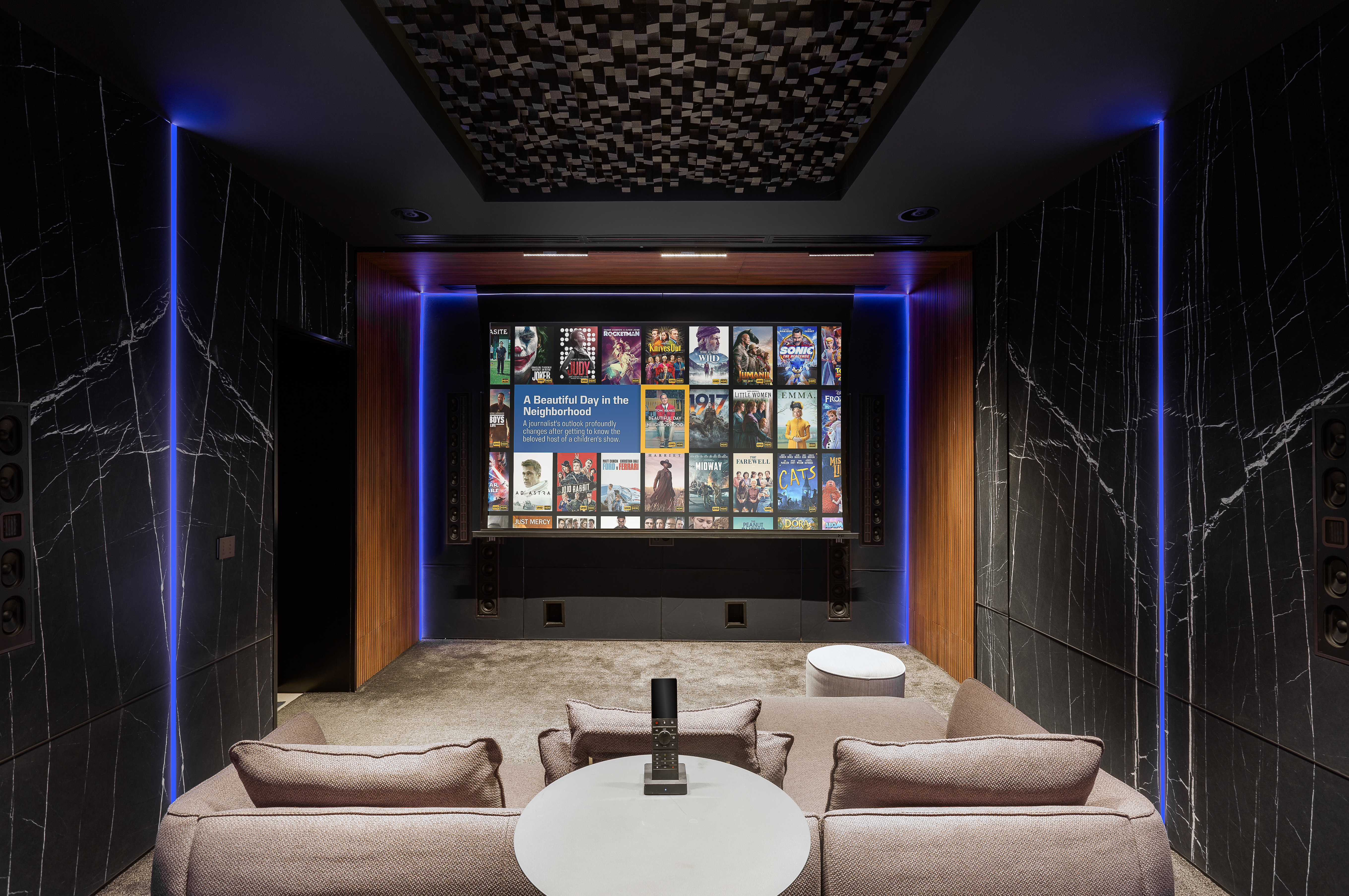
When technology is designed early, it disappears into the architecture. When it arrives late, it competes with it.
After decades of working on buildings across residential, commercial, hospitality, and public spaces, one truth has never changed.
No architect ever intends to compromise their design. It usually happens quietly, much later, because of AV.
Not because the architect lacked vision. Not because the technology was poor. But because the technology arrived after the architecture had already made its most important decisions.
By the time AV enters the conversation, the ceiling is already defined. The lighting concept is locked. The MEP routes are coordinated. And the architecture is no longer flexible.
That is when good buildings begin to negotiate with technology instead of commanding it.
The Moment Things Start Going Wrong
It usually begins innocently.
A screen is requested. A sound system is “needed.” Someone asks, “Can we just add speakers here?”
On paper, it looks simple.
In reality, this is where architecture begins to lose leverage.
Because AV is not decorative. It is spatial, acoustic, electrical, thermal, and experiential, all at once.
When introduced late, it does not adapt quietly. It demands space, and space must come from somewhere.
So ceilings are lowered. Lines are interrupted. Symmetry is sacrificed. Acoustics are “corrected” instead of designed. Technology becomes visible, not by intention, but by necessity.
At this point, the building still functions. But it no longer feels resolved.
What Most People Misunderstand About AV
After many years in this industry, I can say this confidently.
Most AV problems have nothing to do with equipment.
They are problems of timing.
When AV is treated as a late stage addition, it behaves like an intruder. When it is considered early, it behaves like a collaborator.
Good AV consulting is not about choosing brands. It is not about selling devices. And it is certainly not about filling spaces with technology.
At its best, AV consulting is about preserving architectural intent while ensuring spaces perform the way people actually use them.
Why Architects Feel the Pain More Than Anyone Else
When AV is added late, the consequences rarely land on the AV contractor.
They land on the architect.
Clients don’t say, “The AV consultant failed.” They say, “The design doesn’t feel as clean as the render.”
They don’t complain about cable routes. They complain about visual clutter.
They don’t talk about acoustics in technical terms. They say, “The room doesn’t sound right.”
And slowly, architecture is blamed for compromises it never created, but was forced to absorb.
The Rule That Has Saved More Projects Than Any Specification
There is a rule I have seen save time, money, and design integrity again and again.
If it affects the ceiling, it must be discussed early.
Speakers. Microphones. Cameras. Screens. Sensors. Acoustic treatments. Control interfaces.
These are not accessories. They are spatial decisions.
When architects engage AV early, something powerful happens.
- Ceilings stay clean.
- Acoustics are designed, not corrected.
- Technology aligns with proportions and sightlines.
- Control feels intuitive, not intrusive.
- The building feels intentional all the way through.
Most importantly, technology disappears into the architecture.
What Early AV Collaboration Really Gives Architects
When AV consulting is brought in early, not to dominate, but to listen, architecture gains.
- Freedom, not restriction.
- Fewer redesign cycles.
- Cleaner detailing.
- Better coordination with MEP.
- Fewer “on site surprises.”
- A final space that feels resolved, not negotiated.
This is not about adding more consultants. It is about removing future compromises.
A Final Thought From Experience
Across decades of real projects, the most expensive AV mistakes were never technical.
They were strategic.
They happened when AV was treated as something to “fit in later,” instead of something to design alongside architecture.
Great buildings are not just seen. They are heard, felt, and experienced.
And those experiences must be designed early.
A Better Way to Integrate AV
For architects, AV consulting is not about adding complexity. It is about protecting design intent, reducing coordination risk, and delivering spaces that perform as beautifully as they look.

